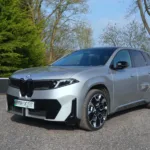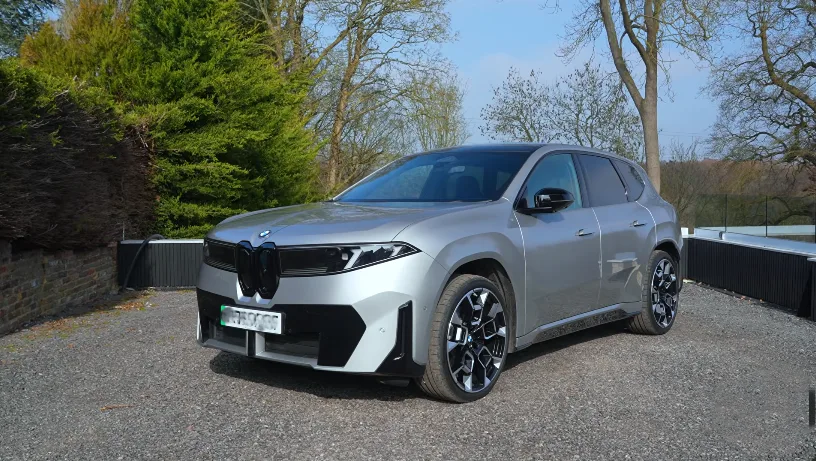
BMW has spent the last several years proving that it can build convincing electric vehicles, but the new BMW iX3 50 feels like something more important than just another EV launch. This is the kind of car that signals a real change in direction, not only for BMW’s electric lineup, but for the brand’s broader design, software, and engineering philosophy.
That matters because the iX3 50 xDrive is not simply a replacement for the old iX3. It is one of the first major production models built around BMW’s Neue Klasse EV architecture, and it sets the tone for a long list of future BMWs that will borrow from the same design language, technology strategy, and platform thinking.
The headline numbers already make it sound serious. The iX3 50 xDrive delivers 469 horsepower and 645 Nm of torque, reaches 0-60 mph in a claimed 4.9 seconds, carries a 108.7 kWh battery, and targets up to 500 miles of quoted range. Add DC fast charging at up to 400 kW, with the potential to add 231 miles in 10 minutes under ideal conditions, and it becomes clear that BMW is aiming high.
On paper, that immediately puts the iX3 50 in the upper tier of the premium electric SUV segment. But the real story goes beyond the spec sheet. What makes this car stand out is how complete the package appears to be. The design feels more confident, the interior is genuinely fresh, the software looks polished, and the driving character suggests BMW has finally produced an electric midsize SUV that feels coherent from top to bottom.
Table of Contents
A New Kind of BMW EV
If there is one central idea behind the BMW iX3 50 xDrive, it is that BMW has stopped treating its EVs like side projects or transitional products. This is a car conceived from the start as a modern electric BMW, not as a compromise built around old packaging rules or legacy assumptions.
That change is visible straight away in the way the car presents itself. BMW has clearly moved away from the idea that electric cars have to look like science-fiction props. Instead, the iX3 draws from the cleaner, more restrained values associated with the original Neue Klasse era. It feels more mature, more considered, and more confident in its own identity.
That historical connection is not just nostalgic branding. The original Neue Klasse models helped define BMW’s modern character by combining compact dimensions, sporty engineering, and executive-class usefulness. In much the same way, the new iX3 is designed to help reset BMW’s formula for the electric age. It is not just another SUV. It is a strategic statement about where the company wants to go next.
That is why the iX3 matters well beyond its own badge. The themes introduced here are expected to spread across a wide range of upcoming BMW products, from electric sedans to larger SUVs and even models that will continue to coexist with combustion powertrains. In that sense, the iX3 is not only a new EV. It is the start of a broader brand-wide transformation.
Neue Klasse Platform
Underneath the body, the iX3 50 sits on BMW’s all-new Gen6 EV platform, and that changes everything. This is a true ground-up electric architecture rather than a combustion-derived structure with battery components added later. The battery is integrated as part of the car’s structure, which helps create a flat floor, a lower center of gravity, and increased rigidity.
BMW also uses zonal wiring, which reduces complexity, cuts weight, and improves overall efficiency. These details might sound technical, but they have a direct impact on how the vehicle feels and performs in daily use. Better packaging improves space. Lower weight improves efficiency. Better rigidity improves ride and handling.
The electrical system is based on an 800-volt architecture, which has become one of the most important markers of serious next-generation EV engineering. In the iX3’s case, that setup works with a 108.7 kWh battery pack and new cylindrical cells that deliver around 20% more energy density. That is a major reason why the range and charging figures look so competitive.
The motor arrangement is just as interesting. At the rear, BMW uses an electrically excited synchronous motor that avoids rare-earth magnets and is both lighter and more powerful. At the front, a simpler asynchronous motor engages when required, helping balance all-wheel-drive traction with better efficiency. Together, they create xDrive torque delivery with very fast response.
BMW has also introduced a new electronic architecture built around several central computing units. One of the most important is the so-called Heart of Joy, which handles dynamics and dynamic performance control with dramatically faster responses in torque vectoring and stability management. Other major systems manage comfort, driver assistance, and infotainment.
The result is not just a faster or more advanced SUV. It is a vehicle engineered to feel more integrated in the way it thinks, reacts, and evolves. For a brand like BMW, that is crucial, because the goal is not simply to build an EV with strong numbers. The goal is to build an EV that still feels recognizably like a BMW.
| Feature | BMW iX3 50 xDrive |
|---|---|
| Power | 469 hp |
| Torque | 645 Nm |
| Battery | 108.7 kWh |
| Range | Up to 500 miles |
| Charging | Up to 400 kW |
| 10-Minute Charge | Up to 231 miles |
| 0-60 mph | 4.9 seconds |
| Architecture | 800V |
| Boot Space | 520 liters |
Watch the BMW iX3 50 xDrive first drive video below for a closer look at the design, interior, and on-road impressions
BMW iX3 50 Range and Charging
The biggest number attached to the new iX3 is the quoted 500-mile range. In a premium electric SUV of this size, that is an eye-catching figure and one that instantly changes the conversation around the car. Whether buyers are comparing it to rivals from Mercedes, Audi, or Tesla, BMW clearly wants range to be one of the iX3’s biggest strengths.
Even with the usual caveats around quoted figures, the message is hard to miss. This is not being positioned as a stylish EV with acceptable usability. It is being positioned as a serious long-distance electric SUV with genuine touring potential.
Charging performance strengthens that case further. The iX3 50 supports up to 400 kW DC fast charging, and under ideal conditions it can recover 231 miles of range in 10 minutes. For buyers who regularly travel long distances, that kind of charging speed changes the ownership experience in a meaningful way.
Fast charging is not just about convenience in isolated moments. It changes the rhythm of road-trip driving. It makes the car easier to trust. It reduces the need to obsess over every charging stop and gives the iX3 a much stronger sense of real-world usability than many earlier premium EVs managed.
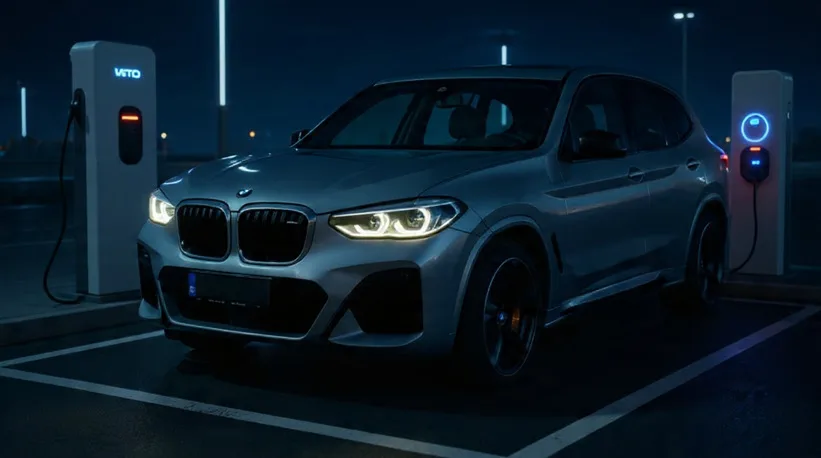
BMW also seems to have paid attention to the everyday details. The charging port opens via touch and can close itself automatically when the driver walks away after unplugging. It is a small feature, but the sort of small feature that matters when repeated over months and years of ownership.
This is really the point of the iX3’s range-and-charging story. The numbers are impressive, but their value lies in how they simplify life with the car. A premium EV should not just look advanced on paper. It should make daily use and long-distance driving feel easier, more natural, and less stressful. That is exactly the territory BMW is targeting here.
Design That Looks Back to Move Forward
The iX3’s design is one of the most interesting parts of the whole package because it does something many modern EVs have struggled to do: it looks forward without losing its roots. Rather than trying to appear as alien as possible, the iX3 feels grounded in BMW history.
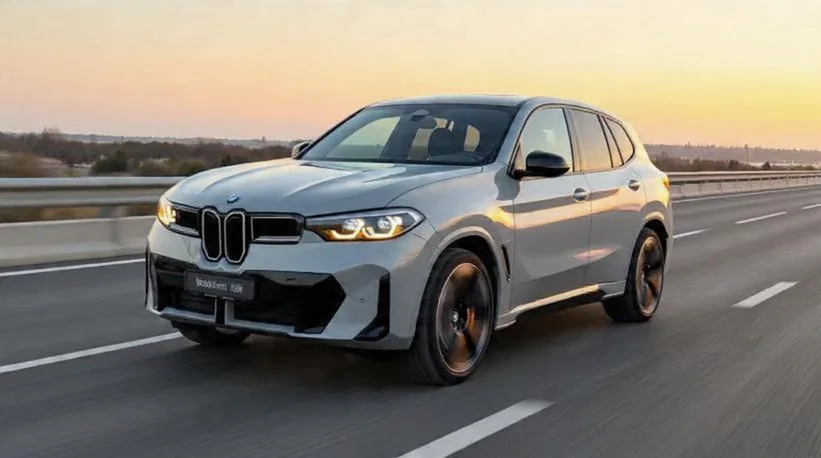
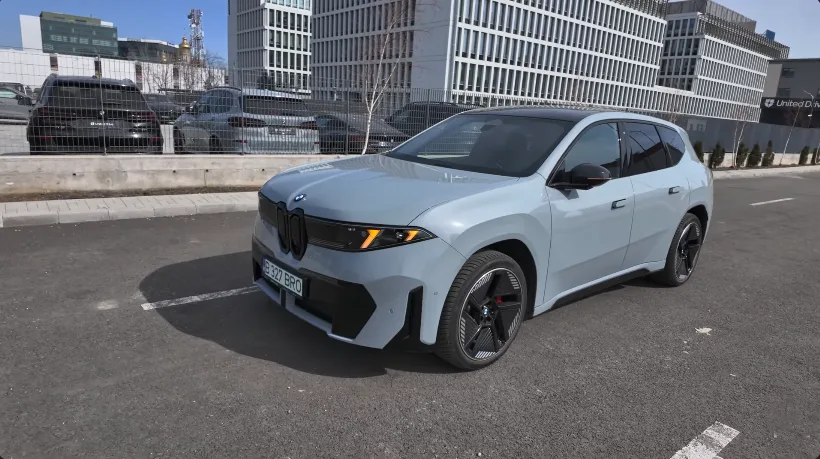
The front end is where that is most obvious. BMW has clearly listened to criticism of oversized grilles and overly aggressive surfaces, and the result is a cleaner, more disciplined face. The new interpretation of the kidney grille is tighter, more integrated, and paired with a black connecting panel and lighting that stretches out toward the edges.
It still looks modern, but it no longer feels desperate to prove how futuristic it is. That restraint works in the car’s favor. The illuminated grille remains present without overpowering the entire design, while the horizontal and vertical lighting signatures help give the front end a distinctive identity.
There are also plenty of smaller details that add character. The bonnet has stronger sculpting, the logo treatment has evolved, and the lower front section uses active aero elements and air curtains to blend function with styling. This is not a design built around one oversized gesture. It is a design built around layers, contrast, and proportion.
Color choice seems especially important with this new look. Lighter shades do a much better job of revealing the body surfacing, wheel arches, black lower trim, and overall visual structure. In darker colors, some of that detail disappears, which makes the car look less interesting and less resolved.
From the side, the iX3 remains recognizably a BMW SUV. It has generous glass surfaces, pronounced wheel arches, and a planted stance that gives it the right mix of utility and athleticism. In M Sport Pro form, the large wheels and red brake calipers help add some drama without making the car look excessive.
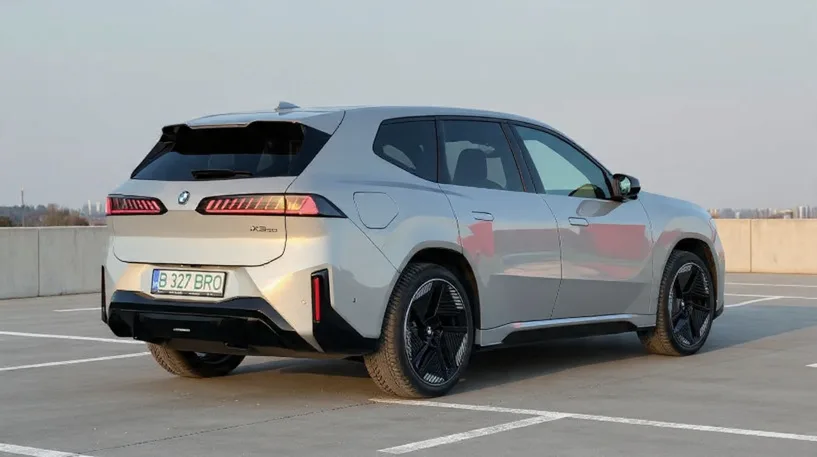
The rear is more likely to divide opinion. The taillights move away from traditional X3 themes and adopt a straighter, more graphic treatment. Some buyers will appreciate the cleaner and more digital look, while others may miss the more familiar visual motifs of previous BMW SUVs.
Still, the rear design has plenty of presence. The lower diffuser treatment, wide visual stance, and muscular body surfacing give the car a broad-shouldered look that suits its role well. It may not win universal praise, but it does feel like part of a genuine rethink rather than a half-hearted update.
BMW has also included a frunk, which is still a welcome bonus in this class, and the rear boot offers 520 liters of cargo space. That does not make the iX3 the most spacious EV in every single measurement, but it does reinforce the impression that BMW has designed this SUV to be broadly useful, not just technically impressive.
Interior Revolution
If the exterior marks a major change, the interior is even more radical. This is not a familiar BMW cabin with a new screen and some fresh trim. The iX3 introduces a completely different approach to layout, interface logic, materials, and the relationship between driver and information.
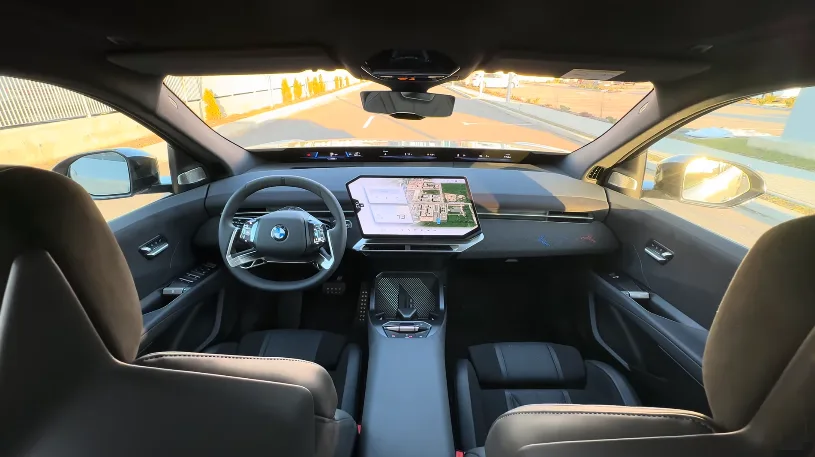
The most dramatic feature is BMW Panoramic Vision, which stretches information across the base of the windshield using a projected display integrated into a darkened section of glass. It looks unusual at first, but it also feels genuinely different from the standard approach of simply stacking larger screens on top of the dashboard.
That matters because the automotive industry has become increasingly predictable in the way it handles interior technology. Too often, innovation now means “add another display.” BMW has taken a risk by trying something that changes not only what the driver sees, but how the information is presented in the first place.
The central touchscreen complements that system well. It has an angular shape that gives it more personality than the usual square tablet format, and it appears to strike a sensible balance in size. It is large enough to be useful but not so large that it dominates the entire cabin. Just as importantly, BMW has avoided the temptation to add a gimmicky passenger display simply because rivals are doing it.
The rest of the cabin has also been rethought. The start button is gone, the gear selector is new, and many of the usual touch points, from seat controls to switches and vents, have been redesigned. At first glance, that sounds like the kind of thing that can quickly become frustrating. But here, the operating concept seems much more polished than many early attempts at digital-first cabin design.
The material quality appears strong as well. BMW mixes fabric, microfiber, and Nappa leather in a way that feels modern without becoming sterile. In higher trims, the M bucket seats with illuminated logos add some theatre, while the panoramic roof helps keep the interior airy and open.
Rear-seat space also looks like a genuine strength. Thanks to the flat floor and low packaging, the back seats offer a lot of legroom, strong headroom, and an overall sense of openness that pushes the iX3 closer to larger SUVs than many buyers might expect. That matters in a family EV, where day-to-day practicality often matters more than one or two flashy features.
What is perhaps most impressive is that the interior does not just look different for the sake of being different. It seems to have been designed with a clear point of view. That alone already sets it apart from many rivals.
Software, Controls, and the Steering Wheel Debate
BMW knows that software now plays a major role in how buyers judge a modern EV, and the iX3 reflects that reality. The operating system appears cleaner, more logical, and more mature than some earlier BMW systems, which is exactly what this new generation of vehicles needs.
Both the central display and Panoramic Vision interface can be customized, allowing different layouts, widgets, and information priorities depending on the driver’s preferences. That flexibility matters because it helps the system feel personal rather than rigid.
The drive modes have also been simplified in a welcome way. Instead of burying the experience under too many theatrical themes and submenus, BMW now focuses on more useful and understandable modes such as Personal, Sport, Efficient, and Silent. That makes the car feel easier to live with and less interested in gimmicks.
Climate controls are another surprisingly strong point. Digital airflow adjustment can be awkward in many modern cars, but here the implementation appears intuitive and fast enough to use without frustration. This may sound like a small issue, but it matters enormously in the real world, where poorly designed climate interfaces can sour an otherwise impressive interior.
Apple CarPlay integration, downloadable features, over-the-air updates, and connected services all help make the iX3 feel current. BMW also adds more enthusiast-focused digital tools, such as performance data and M-oriented displays, which gives the software suite a bit more personality than a purely sterile tech interface.
Not every control decision is a clear win, though. The steering wheel design is likely to be one of the car’s most divisive talking points. BMW has introduced new multi-spoke designs that look more experimental than traditional, and while they appear comfortable to hold, they may not instantly appeal to long-time BMW drivers.
That tension actually says a lot about the iX3 as a whole. BMW is clearly willing to take some risks here. Not every choice will land equally well with every buyer, but the important thing is that the fundamentals of usability still appear strong. In a car this different, that is a major achievement.
On the Road
All of the platform talk, design analysis, and software detail would mean very little if the iX3 disappointed once it started moving. Fortunately, the driving impression suggests that BMW has not forgotten what matters most in a premium SUV.
In comfort-oriented driving, the iX3 feels smooth, refined, and quiet. The steering is light without feeling vague, and the suspension appears well judged for broken roads and daily use. That is exactly the sort of setup a midsize premium SUV needs, especially one that will spend much of its life carrying families, commuting, or covering long motorway distances.
What stands out is how naturally the car seems to handle rougher surfaces. A lot of EVs feel heavy and slightly brittle over bad roads, but the iX3 appears to deliver the kind of compliance buyers still associate with a well-sorted BMW SUV. That makes a real difference in perceived quality.
At the same time, the iX3 does not feel soft or disengaged. Sport mode sharpens the car considerably, with stronger throttle response, heavier steering, and more dynamic display themes. The quoted 0-60 mph time of 4.9 seconds is already quick, and in practice the iX3 feels every bit as strong as buyers in this class will want.
Straight-line pace is only part of the story, though. What matters more is how usable that performance feels. The iX3 appears to deliver its pace in a way that feels immediate but still controlled, which is a much more BMW-like trait than simply chasing headline acceleration figures.
Body control also seems promising. Despite the inevitable mass that comes with a large-battery electric SUV, the low center of gravity and platform tuning help the iX3 feel better tied down than many rivals. It may not hide its weight entirely, but it appears to manage it intelligently.
This is important because it supports the idea that the iX3 is not just a range-first EV. It is trying to preserve a sense of driver appeal while still functioning as a refined, comfortable family SUV. That balance is difficult to achieve, and it is one of the most encouraging things about the car.
Driver Assistance and Long-Distance Ability
Long-distance comfort may be one of the iX3’s biggest strengths. A premium electric SUV with this kind of quoted range and charging capability already has strong touring potential, but the rest of the package appears to support that mission as well.
Motorway refinement seems to be one of the car’s standout qualities. The cabin remains quiet, the ride stays composed, and the overall experience feels relaxed in exactly the way a long-range electric SUV should. That makes the iX3 more than just a technical exercise. It makes it look like a genuinely capable road-trip machine.
Driver assistance also appears to be well judged. BMW’s approach to adaptive cruise and lane-based support seems more natural than some rival systems, especially in the way it remains useful without becoming intrusive. The controls themselves are reportedly intuitive, with steering wheel inputs that make speed adjustments easier and more precise.
There is also clear evidence that BMW is building for a more software-defined future. The iX3 includes the foundation for more advanced lane-change and assisted-driving functions in markets where regulation allows them. That helps future-proof the car and gives buyers a stronger sense that this is a platform designed to evolve.
Braking is another important detail. BMW claims that up to 98% of braking can be handled through regeneration, yet the pedal feel still appears to remain natural enough for confident driving. That is not always easy to achieve in EVs, where regenerative blending can sometimes feel artificial or inconsistent.
Taken together, these traits reinforce the iX3’s identity as an all-rounder. It has the pace to feel exciting, the comfort to feel expensive, the assistance systems to feel modern, and the touring ability to feel genuinely useful. That breadth of talent may end up being one of its greatest strengths.
Price, Trim, and Market Position
BMW appears to have priced the iX3 with clear intent. In the UK, the range starts at around £58,000 on the road for the Sport version, with M Sport and M Sport Pro trims sitting not far above that. That gives buyers a straightforward ladder of options without turning the better-looking versions into unreachable luxury territory.
The M Sport Pro is likely to be the sweet spot for many buyers. It brings the strongest visual package, more presence, and some worthwhile trim upgrades without a dramatic jump in cost. In a car whose design benefits from the extra contrast and detail, that matters.
Just as important is where the iX3 sits against rivals. BMW has managed to place it competitively against key competitors such as the electric Mercedes GLC and Audi Q6 e-tron, which means the iX3 does not rely on brand loyalty alone. It looks capable of competing on product merit as well.
That is a big deal because the midsize premium SUV category is one of the most important battlegrounds in the EV market. These are the cars many buyers actually want to own, and they need to be usable, well priced, and broadly appealing. The iX3 seems aimed directly at that sweet spot.
BMW also appears to understand that this car cannot afford to be niche. The iX3 is not supposed to be a low-volume halo product or a technical curiosity. It is meant to be a core model, one that introduces the Neue Klasse era to mainstream premium buyers and proves that BMW can lead in the next phase of electric competition.
Why the iX3 Matters More Than Most EV Launches
The iX3 matters because it brings together several things BMW needed to get right at the same time. It had to look like a BMW again without repeating the excesses that turned off some buyers. It had to introduce a new digital cabin without becoming a usability disaster. It had to offer serious range and charging performance, and it had to drive with enough polish and character to justify the badge.
That is a very demanding brief. Most EVs excel in one or two areas and feel compromised in others. Some win on software but feel generic on the road. Others are brutally fast but lack subtlety, comfort, or interior quality. Still others offer practical range but fail to feel special.
The iX3 appears to avoid many of those traps. It may not be perfect, and not every styling or ergonomic decision will win universal approval, but it seems to get the big things right. The design has identity. The cabin has a point of view. The software looks mature. The range and charging figures are highly competitive. And the driving experience appears to retain the sense of balance and composure buyers still want from a BMW.
That is why calling it an all-rounder feels accurate rather than lazy. This is not a one-dimensional EV built to chase headlines in a single category. It is a premium electric SUV that seems to do almost everything well.
In many ways, that is harder to achieve than producing the fastest EV or the one with the most screens. It requires discipline, not just ambition. And that may be the most encouraging thing about the iX3. It suggests BMW is finally building EVs with a clearer sense of what actually matters.
Final Thoughts
If BMW wanted one vehicle to explain what the Neue Klasse era means in the real world, the iX3 50 xDrive makes a persuasive case. It introduces a new platform, stronger charging capability, far more ambitious range, a radical yet usable interior, and a design language that feels more authentic than some of BMW’s recent experiments.
More importantly, it does all of that while still behaving like a premium family SUV should. It looks refined enough for everyday life, quick enough to feel genuinely modern, spacious enough for family use, and polished enough to suggest BMW has done more than just catch up.
There will still be real questions once independent testing, ownership costs, real-world efficiency figures, and direct comparison drives begin to emerge. But as an early impression, the iX3 looks like one of BMW’s most convincing EVs yet and one of the most promising premium electric SUVs in the next wave of launches.
If this is the standard BMW wants to set for the cars that follow, then the iX3 may end up being remembered as the model that properly started the brand’s next electric chapter.
FAQ’s
What is the BMW iX3 50 xDrive?
The BMW iX3 50 xDrive is a new premium electric SUV built on BMW’s Neue Klasse Gen6 EV platform and positioned as a major step forward in the brand’s electric lineup.
How much power does the BMW iX3 50 have?
The iX3 50 xDrive produces 469 horsepower and 645 Nm of torque, giving it strong performance for the premium midsize electric SUV class.
What is the BMW iX3 50 range?
BMW is targeting up to 500 miles of quoted range for the new iX3 50, making it one of the more ambitious electric SUVs in its segment.
How fast can the BMW iX3 charge?
The iX3 supports DC fast charging at up to 400 kW and can add as much as 231 miles of range in 10 minutes under ideal conditions.
What battery does the BMW iX3 50 use?
The iX3 50 uses a 108.7 kWh battery pack paired with an 800-volt electrical architecture and new cylindrical cell technology.
How quick is the BMW iX3 50 xDrive?
BMW quotes a 0-60 mph time of 4.9 seconds for the iX3 50 xDrive, which places it firmly in performance SUV territory.
What is BMW Panoramic Vision?
BMW Panoramic Vision is the new full-width projected display system at the base of the windshield that presents key information in the driver’s field of view.
How much does the BMW iX3 cost?
In the UK, the BMW iX3 starts at around £58,000 on the road for the Sport version.